BARBARA NAGY (HU)
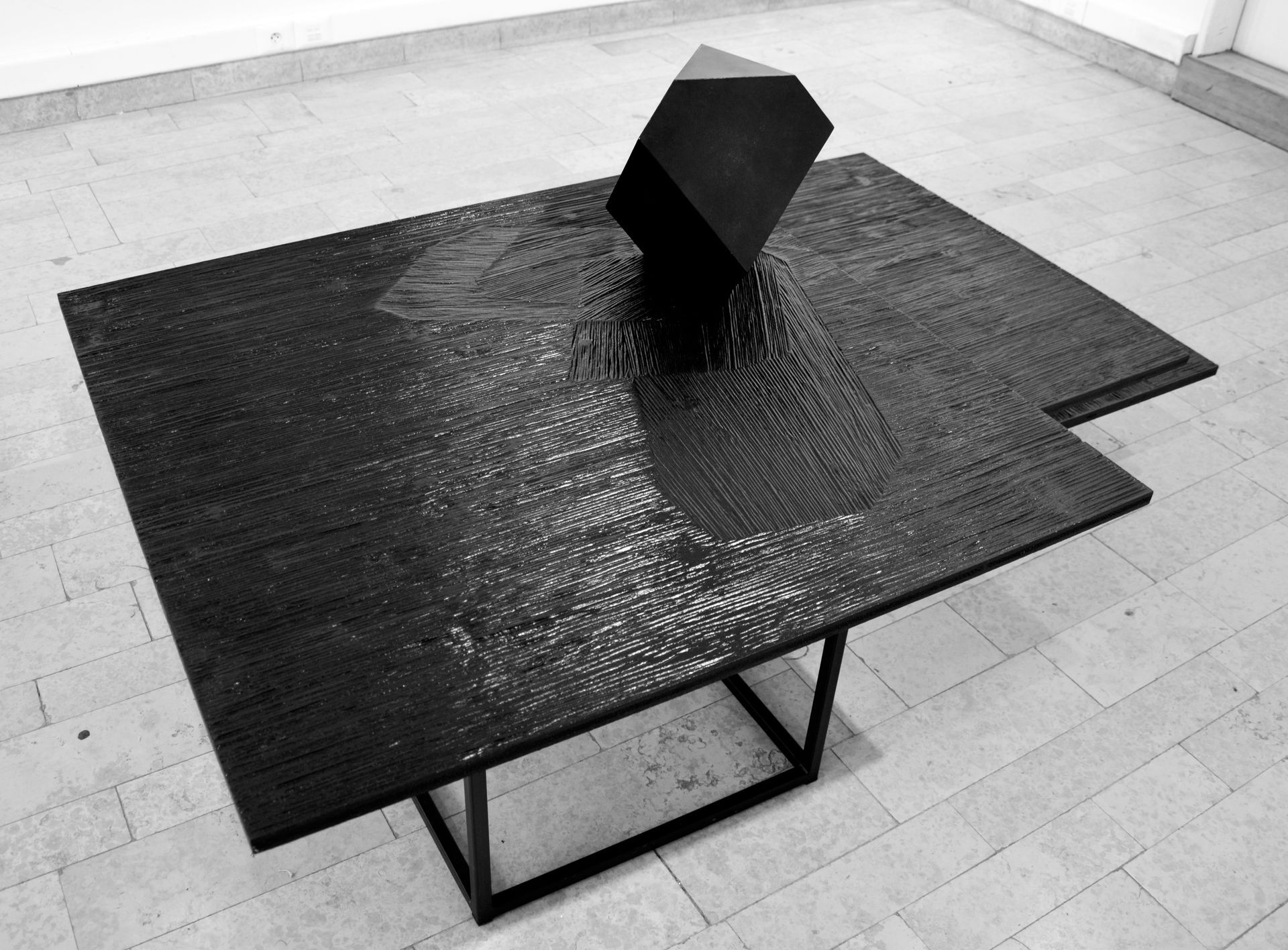
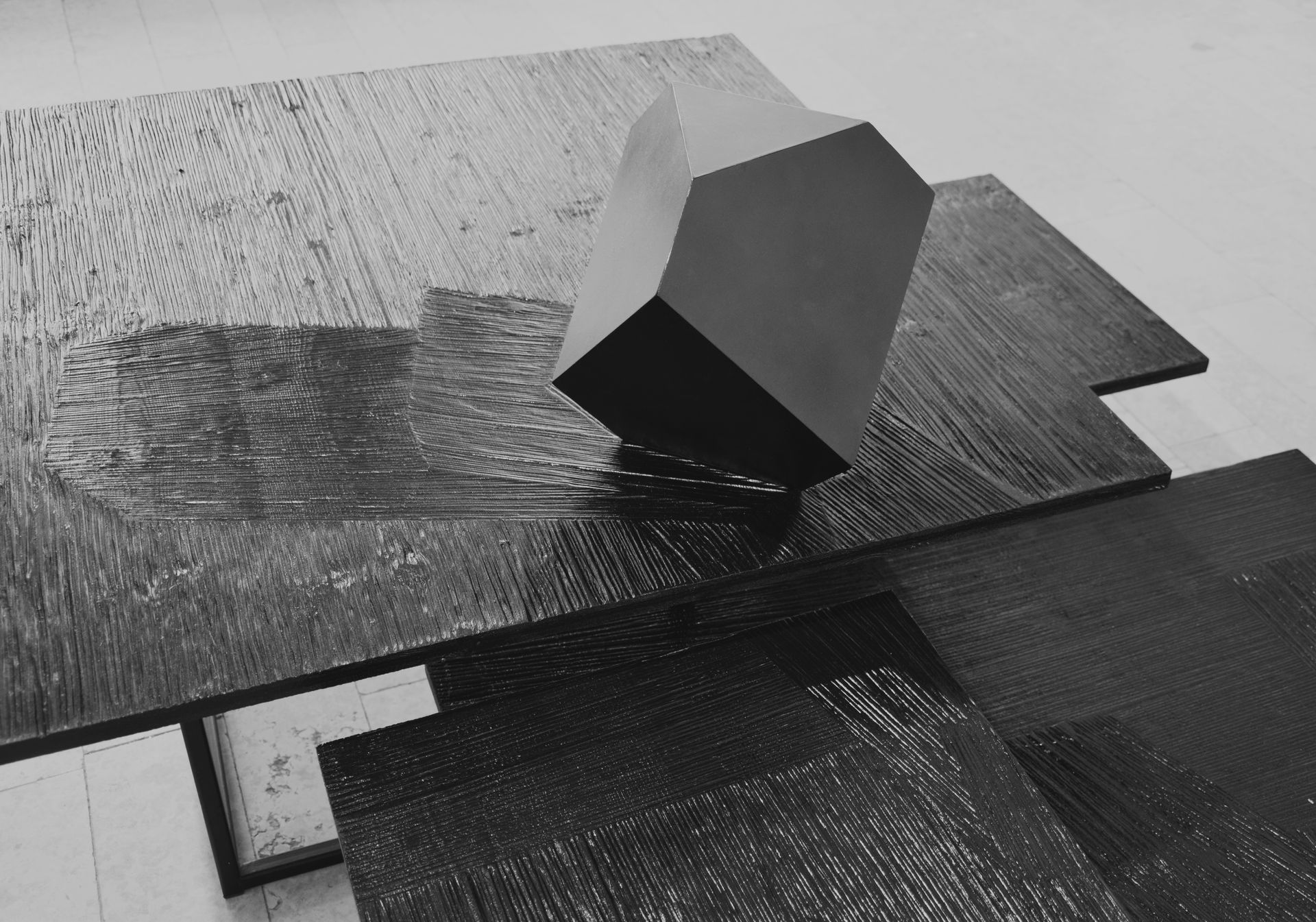
De Schaduw van Melancholie
2026
installatie, hout, ijzer
300 x 160 x 70 cm
The Shadow of Melancholia
2026
installation, wood, iron
300 x 160 x 70 cm
Courtesy Inda Gallery, Boedapest (HU)
ONTBERGEN (negende kamer)
"De artistieke interesses van Barbara Nagy richten zich op de aard van het zien, visuele waarneming, de kracht van licht om beelden te creëren en de filosofische vragen die hiermee samenhangen.
Ze maakt doorgaans gegraveerde, zwartgelakte houten panelen. Hoewel haar werk aansluit bij de monochrome schildertraditie, is het ook nauw verbonden met de beeldtaal van de non-figuratieve kunststromingen uit de 20e eeuw. Barbara Nagy's 'Lichtschilderijen' representeren niet, maar 'realiseren', zoals ze zelf zegt. De geometrische en organische vormen van haar ritmisch gestructureerde composities worden zichtbaar gemaakt door het licht dat reflecteert op het driedimensionale oppervlak van de schilderijen, en ook door de tijd, die er onlosmakelijk mee verbonden is."
Inda Gallery, Boedapest (HU)
Voor de tentoonstelling heeft Barbara Nagy een vloerbeeld gemaakt waarin ze een verbinding tot stand brengt tussen haar werkwijze om licht te realiseren en de vorm van de polyhedron zoals deze voorkomt in de ets 'Melancholie' (1514) van Albrecht Dürer. Licht en donker ontmoeten elkaar in dit werk. Er ontstaat een beeld waarin we getuige zijn van een onpeilbare diepte die alleen al werkend zichtbaar kan worden.
Barbara Nagy, ° 1976, Szentendre (HU),
woont en werkt in Szentendre
UNCONCEAL (ninth room)
"Barbara Nagy's artistic interests focus on the nature of vision, visual perception, the power of light to create images, and the philosophical questions related to these issues.
She typically creates engraved, black-painted wooden panels. While her work aligns with the monochrome painting tradition, it is also deeply connected to the language of 20th-century non-figurative art movements. Barbara Nagy's ‘Light-Pictures’ do not represent, but, as she herself puts it: ‘realise’. The geometric and organic forms of her rhythmically structured compositions are made visible by the light that reflects off the three-dimensional surface of the pictures, as well as through time, which is inseparable from it."
Inda Gallery, Budapest (HU)
For the exhibition, Barbara Nagy has created a floor sculpture in which she establishes a connection between her method of realizing light and the form of the polyhedron as it appears in the etching 'Melancholy' (1514) by Albrecht Dürer. Light and dark meet in this work. An image emerges in which we witness an unfathomable depth that can only become visible through the act of working.
Barbara Nagy, ° 1976, Szentendre (HU),
lives and works in Szentendre